Sunday, February 27, 2011

DIY Wedding Photography: Shot List for the Traditional Couple


Cuba Gallery: Australia / Melbourne / Luna park / circus / retro / vintage / people / fun / scary / sepia / photography by ►CubaGallery


Photo Credit: celtics baby clothes


How can you save money on photography for your wedding? Do it yourself! DIY wedding photos won't sacrifice your precious wedding memories. Just make sure you are doing the wedding justice by creating a shot list before the ceremony.

As a traditional couple, you will want "classic" wedding portraits. Make sure you get the following shots for your do it yourself wedding album.

DIY Wedding Photo Shot List - Pictures of the Bride and Groom

Have the bride and groom stand in front of the church. Stand back from the couple so you can get their entire bodies into frame. Make sure to get the entire wedding gown in the picture.

Take a few steps forward, use your zoom, and take a close-up portrait of the bride and groom facing forward.

Have the bride and groom turn their heads and look into one another's eyes. Take a close-up.

Snap a photo of the bride and groom standing in front of the church on their wedding day.

DIY Wedding Photo Shot List - Photos of the Wedding Party

Every wedding album needs a picture that includes the entire wedding party. Line up the bridesmaids and groomsmen with the bride and groom in the center. The flower girl and ring bearer can stand in front of the attendants, but do not place them directly in front of the bride and groom. Doing so would block the bride's wedding gown.

Take some wedding photos of the bride with her bridesmaids. Then take some pictures of the groom with his groomsmen.

Make sure you get a picture of just the flower girl and ring bearer. These cute wedding photos will turn out great!

DIY Wedding Photo Shot List - Pictures of Family Members

Family plays an important role in any wedding. Make sure to include them in the wedding photographs.

Shoot the bride with her family and the groom with his family. Marriage unites these two families, so get a shot of them all together as well.

Make sure to get a picture with the grandparents as well.

DIY Wedding Photo Shot List - Photographs of The Ceremony

The ceremony is the most sacred part of the wedding. Don't be too intrusive while getting your shots. Here are some wedding photos you must get:

Each bridesmaid and groomsmen as they walk toward the altar

The flower girl and ring bearer as they walk down the aisle

The bride walking down the aisle and being given away

Close-up of the groom when he sees his bride

The bride and groom standing at the altar (from behind and from in front if you can manage)

The entire wedding party during the ceremony

Bride and groom's first kiss as a married couple

The couple lighting the unity candle

Bride and groom exchanging rings

Bride, groom, and attendants as they walk back down the aisle

DIY Wedding Photo Shot List - Reception Photos

The reception offers many opportunities to capture the spirit of celebration. Take a lot of journalistic style photographs during the reception of guests dancing, eating, and laughing.

In addition to these spontaneous photos, remember to snap the following pictures:

The bride, groom, and attendants in the receiving line

Groom removing and tossing the bride's garter

Bride tossing her bouquet

The wedding cake being cut and fed to the bride and groom (protect your camera from flying cake!)

The couple's first dance and dancing with their parents

The Most Important Tip for DIY Wedding Photography - Be Creative

This wedding photography shot list will get you started. It is not intended to limit your creativity. These are only the basic poses and wedding pictures a traditional couple would like to have in their wedding photo album. Take these basics and add your own ideas to create a unique wedding gift -- the gift of memories.

Sources

DFM Photography, Wedding Shotlist Helper, http://www.dfmphotography.com/wedding_shotlist.shtml

Personal Experience


DIY Wedding Photography on a Budget


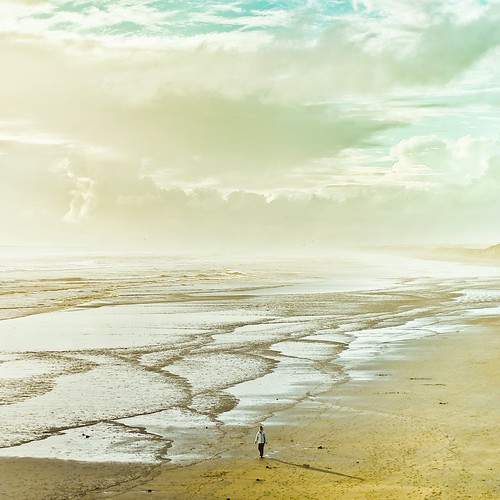
Cuba Gallery: New Zealand / landscape / clouds / amazing / sky / ocean / beach / sea / photography by ►CubaGallery


photo source


So, your wedding is fast approaching and you want memories that will last a lifetime. However, you are on a budget and don't have a lot of money to spend for a professional wedding photographer. You can still get professional-looking, creative, memorable pictures with DIY wedding photography.

The first thing to do is to find someone who takes great pictures. This doesn't have to do be a professional photographer. Many people have a "great eye" and instinctively know how to take great pictures. Think of friends or family members who you've complimented on their photography from vacations, for example. Another way to find a cheap wedding photographer is to look on local college bulletin boards, or post on them yourself in the art department or photography department. Many students have amazing talent, but since they are still a bit inexperienced, will be your wedding photographer for a fraction of the price of a professional wedding photographer. Some may even photograph your wedding for free, for no more than a free meal and use of your wedding pictures for their portfolio. You can also consider putting an ad on Craigslist for a hobbyist who is not a professional wedding photographer, but has an artistic eye and loves to take pictures. Get samples of work and negotiate a price you are both pleased with.

Whether you use a talented stranger or an artistically-inclined friend or family member as your wedding photographer, make sure they have a good camera. You may even consider purchasing a good quality, digital camera that you can give them as their "payment". If you need to purchase a camera for your DIY wedding photography, make sure you give it to the wedding photographer in plenty of time for them to learn the ins and outs of the camera, so they can adjust the settings. Digital cameras also allow for easy editing, so you or your DIY wedding photographer can edit your wedding pictures. Also, digital cameras have a large capacity to store many pictures, with a memory card they can hold hundreds of pictures, so you will have plenty of wedding photos to choose from to preserve your special day.

Another idea is to meet with your DIY wedding photographer to develop a plan of what you want photographed. Remember, since you will be saving a lot of money by not hiring a professional wedding photographer, you will have to do some of the work yourself. This includes providing the DIY wedding photographer with a list of what you want photographed. This may include photographs of the wedding rings, the wedding invitations, the bridal party, the groomsmen, the family of the bride, the family of the groom, the bride and groom's first kiss, the wedding service, etc. This will help you and your DIY wedding photographer be on the same page and know each other's expectations beforehand, so you get exactly what you want on your special day.

Also, encourage others to take pictures of your wedding. Some of the best wedding photography are those wonderfully candid moments caught by some of the guests. Some wedding couples choose to put disposable cameras on tables for guests to take photographs of, then ask that they leave the cameras when they leave the wedding reception. Some give the cameras out as wedding favors and ask that any great wedding photographs be sent to the married couple.

Lastly, consider the best of both worlds. You can hire a professional wedding photographer for a short period of time to take a few very specific pictures, then rely on your DIY photographer and wedding guests to take the rest of the photographs. This will eliminate a lot of cost for a professional wedding photographer. You can also opt to don your wedding attire a few days after the event and go to a studio to have a few professional pictures taken.

Remember, it doesn't take a professional photographer to take some amazing, creative, professional-looking wedding photography. Have a great day!

Saturday, February 26, 2011

Stephanie Harrison Photography - Where You'll Find the Best Photographer in Town


Edinburgh Photography, Double Yellow by John Gilchrist


credit,image source


Whether you're looking for that perfect photographer for senior pictures, wedding photos, new baby celebration or special family moments, Stephanie Harrison Photography is the place to go! You'll not only find a professional studio that is conveniently located in the heart of the Historic Depot District in Richmond, Indiana, but you'll meet one of the friendliest, easy going photographers around; not to mention at a great value!

The photographer at Stephanie Harrison Photographer, none other than Stephanie Harrison herself, offers an artistic style that can't be found elsewhere. The results of her work give an eclectic, non-staged, and real feeling. She captures expressions and movements perfectly in her photographs. She's got the perfect personality for children and adults alike. She can accommodate any situation from serious, quiet moments to doing whatever is needed to get an unsure baby to smile, make nervous folks feel comfortable or even catch that wondering gaze of a beloved pet.

Photos aren't always taken inside the studio at Stephanie Harrison Photography. The opportunity is also there to go outdoors and use the resources of the Historic Depot for a more urban look, combining the exposed brick of old buildings with the sweet, fresh face of a new baby, for example. Stephanie is also often available for on-site shoots for weddings, special celebrations and other purposes!

Stephanie Harrison has the experience to make your photo shoot the best it can be! She's been featured in a number of magazines across the world and has won various photography awards. With such skill and recognition one might think her prices would reflect it, but at Stephanie Harrison Photography, the value is unreal!

The session fee is a very reasonable $40.00 for up to four people. Prices for prints obviously vary by size but range anywhere from $8.00 for eight wallets up to $90.00 for a huge 20x30 print! She offers packages for senior pictures starting at a low $99.00 and Wedding Packages that can be had from $550.00. Also available are Gallery Canvas Wraps in various sizes which are, simply put, awesome!

Stephanie Harrison Photography can be found at 195 Fort Wayne Avenue in Richmond, Indiana and reached at (765)962-3133. The website, www.stephanieharrisonphotography.com offers numerous examples of Stephanie's work, a price sheet, bio, and contact information for setting up your first session.

Stephanie Harrison Photography; you simply won't find a better photographer around!


Using Depth of Field for Photography


Photography is not a crime (or is it?) by Diesel Ducy


source


It's one of the greatest tools available to photographers, it's easy to use, and yet it's among the least known and used abilities of a camera today. Pro photographers have used it for decades, but the amateur can use these same techniques without paying the professional price. It's called depth of field, and it's accessed through the use of the aperture.

The aperture, simply put, is the hole that light comes through in your camera. Light passes through the front of the lens, through a series of glass pieces, through a hole at the back of the lens, and into the camera. The aperture is the hole in the back of the lens, and you get to control this vital part of the camera, if you decide to want to bump up your pictures. You can place the camera on auto, and the camera will adjust its aperture, shutter and more to the situation it sees. By placing the camera in more manual modes, you take on powerful and personal control, and YOU get to decide what you want to create with your photographs.

An important factor here is lighting. Any photography relies heavily on the lighting that you are using, whether it be from the natural, ambient light around you, or artificial light, like a strobe or other flash unit. Especially while using natural light, it will be important to use a tripod to keep the camera steady while shooting. If you are shooting on a cloudy day, without much light, then the camera must compensate for less light by having a longer shutter speed, which it will do automatically in the mode I'll be explaining in a moment. A longer shutter speed means the camera won't be able to have a clearly focused picture without the use of the tripod.

Depth of field simply means the area of focus, or the area in the picture that is in focus might be a more accurate term. Photography is a two dimensional medium, having height and width, but it lacks depth, the third dimension. Your photography can create the illusion of that depth through a few easy camera settings. You may be asking yourself, why would I want to create the illusion of depth, and what is it good for? Part of the reason is to create a sense of emphasis. When you take a picture of a large area, with trees, birds, squirrels, people, rocks, etc, what is the thing or object that you are zeroing in on? Is there anything that you really want to emphasize to your viewer? If so, it's probably getting lost in the crowd of other things on the scene. The squirrels are so small you can barely see them, the people are walking their dogs, and the trees are swaying in the breeze. But what if you wanted to focus on the viewer on the flowers in the garden? When you create emphasis on an object, it strengthens your photo, and actually guides the eye of the viewer to that object. You could take pictures to create a story about that, as you can read in my article about photo stories. When you get in to take close-ups of the flowers is where the possibilities of great photography begin.

Emphasize the garden by focusing in on one or two flowers at a time. Grab a tripod, get down to eye level with them, and then get ready. Place your camera in a mode that allows you to change your aperture; the mode is usually called "A", or "AV" on some models. Film cameras can allow these changes too, on SLR models. They require you to simply change the f-stop manually on the aperture ring. On your digital camera, use your selector buttons to change your aperture. You'll see on your digital camera, most likely, a letter f, with the number on the readout on either the monitor, or the info panel on the top of the camera, or perhaps both areas. The f means f-stop, which is the name commonly used to describe the number of the aperture setting. The best way to emphasize a flower is to have only that flower in focus, and to have the rest out of focus. Change your aperture to a really low number, such as 2.8, 4, or 5.6. When the lens is at a low number like this, the lens hole is wide open, but it is creating a small area or depth of field; basically an inch or two will be in focus. Focus your camera, and shoot. Now, look at the camera, and look at your pictures. The one or two flowers should be in focus, but do you see how the background is fuzzy and out of focus? This is what is called a "shallow depth of field", and that comes from using a small number f-stop. That's because you've taken control of your camera, and changed the outcome! Because only the flower is in focus, and the rest is blurred out, you have guided your viewer to what YOU want to emphasize! You have used one of the most powerful tools available for a photographer to bring a new focus to your pictures. Try this with a lot of different scenes; look how the item is forced to really stand out for you because it's the only thing in focus.

Now, on the opposite end of the spectrum are the pictures that have the entire photograph in focus; such as a lighthouse standing out from the beach, with horseshoe crab shells in the immediate foreground. This is also done by changing the depth of field of your camera. Here, you again change your aperture, but this time place it on a high number like 16, 22, 28, etc. This is to create a large depth of field by using a small hole in the back of the lens. Again, you must use a tripod to keep the camera steady. Take a picture with something in the near foreground, such as a rock or the crab shells, and then compose your picture with a mountain or some other object some distance away, focus, and shoot. Remember to use the rule of thirds here for additional emphasis. As you'll see, both areas should be in focus, again showing the third dimension and creating the illusion of depth. This is a large depth of field.

It's a little known tool in the photographer's toolbox, but almost any camera made in the past four years will have some sort of ability to work with depth of field, whether they have a point and shoot or DSLR. Every photographer, of every level, has the ability, through practice, to create beautiful photographs that can rival those of the pros, by using the tools available with every camera. Use the strength of depth of field when you create the third dimension in your photographs, and add a new and incredibly
powerful personal dimension to your photography.